The Fifth Virginia Convention
WILLIAMSBURG, VIRGINIA
June, 1776
It began Monday, May 6, 1776, as the Virginia House of Burgesses met for the last time at the Capitol building in Williamsburg, Virginia. As they disbanded, delegates gathered for the fifth and final Virginia Convention. Prior to this, there had been four other “Revolutionary Conventions” since August of 1774. They were in charge of selecting Virginia’s delegates to the Continental Congress in Philadelphia. They also arranged embargoes of British-made goods and organized military preparations for the upcoming battles they foresaw as an inevitable conclusion to what they were about to do.
It would be Tuesday the 14th of the following week when a “debate” concerning independence from Great Britain would begin. With only one voice of opposition, Robert Carter Nicholas, “debate” would seem to stretch the meaning of the word. Were there any opposing opinions about how to go about independence? Of course. Some delegates even thought they should wait until they could get some solid recognition and, most of all, help of any kind before they stormed off to war.
Obviously, those “minor” details didn’t matter as the next day, May 15th there was a unanimous vote to instruct the representatives of Virginia to introduce a motion at the 2nd Continental Congress meeting at the Philadelphia State House. Eventually, just known as Independence Hall.
And that introduced motion would simply be …
INDEPENDENCE!

But the Virginia Convention wasn’t done. Much like Thomas Jefferson and the “Committee of Five” in Philadelphia, who were busy writing and editing the Declaration of Independence, Virginia had its own committee. Their job was to1 prepare and introduce a Declaration of Rights. Its purpose was to form a government for Virginia.
With unanimous approval, the Virginia Declaration of Rights was adopted on June 12, 1776. This was followed by another unanimous approval, and the first Constitution of Virginia was adopted on June 29, 1776. Within a day they also elected their first governor. He would take office on July 6, 1776. A man with some name recognition—Patrick Henry.
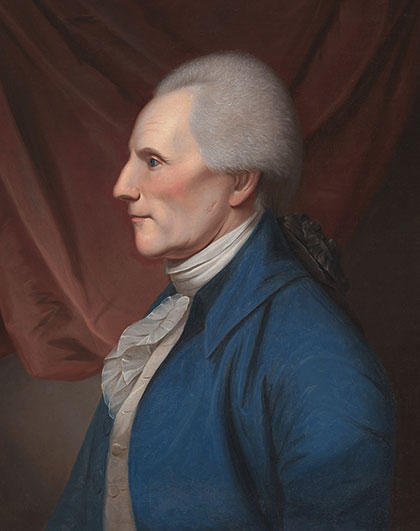
But what about that motion for independence the previous month? Richard Henry Lee, the senior member of the 2nd Continental Congress for Virginia, stood before the delegates in Philadelphia on June 7, 1776, and introduced what could well be called, the First Declaration of Independence!
“That these United Colonies are absolved from all allegiance to the British Crown, and that all political connection between them and the State of Great Britain is, and ought to be, totally dissolved.”
On July 2, 1776, 12 colonies voted to adopt Lee’s motion for independence, and two days later, July 4, 1776, adopted Jefferson’s (and Benjamin Franklin’s, and John Adams’, and Robert R. Livingston’s, and Roger Sherman’s) draft of the Declaration of Independence!
“But wait! Weren’t there 13 colonies? Why did only 12 of them adopt the motion for independence? Why did the thirteenth colony abstain from voting?
The delegation for the “Great State of New York” was WAITING!
Waiting for what?
Instructions!
“Are we doin’ this or what?” was surely on the minds of the New York delegation nervously waiting in the Philadelphia summer heat.
Fortunately, New York was a short horse ride from Philadelphia, but it still took a week to get back with an answer. That answer was, “we agree”!
A little late … the wheels of a full-scale revolution were already rolling! But, what would have happened if New York had said, “NO! We ain’t doin’ this!”
The paperwork had already been printed, although not totally signed by all delegates.
It’s a question we fortunately didn’t have to answer.
So, ironically, Virginia had already declared independence before Thomas Jefferson, also a delegate from Virginia, saw the ink dry on his parchment. A parchment he never gave a firm name to. When he handed in his “assignment” in to the Congress in Philadelphia, he referred to it as the “Declaration”.
We know from manuscripts written later in his life, probably at his home at Monticello near Charlottesville, Virginia, that he had a much lengthier name for that document that officially started a revolution.
“A Declaration by the Representatives of the United States of America, in General Congress assembled.”
The One Person Who Couldn’t Wait!
If Benjamin Franklin were going to change this alternate history of 2025, he needed a way back to 1775. And, if he was correct, there was only a narrow window for his return. His own almanack in the college library and a weather report on the television in Catherine’s home had alerted him that time was running out.
Even though the British had won the American Revolution in this timeline, it was possible, if even slightly, that he could make sure that didn’t happen to his 1775.
But he certainly couldn’t do that locked up in that basement room of a soon-to-be-demolished industrial building! He couldn’t let Professor Archer Murray win!